A gentle reset for a nervous system that won't slow down.
Regulating your nervous system to improve how you feel, faster.
LENS (Low Energy Neurofeedback System) is a drug-free, non-invasive way to help the brain settle out of the stuck, over-activated patterns that drive anxiety, poor sleep, and trouble focusing. I'm a Level-2 LENS provider, and LENS is one of the things I'm asked about most. When people land on this page, they tend to read every word — so here's the honest version of what it is and whether it might help you.
Not sure if this is you? Take the quick 2-minute nervous-system self-check — it'll help you tell whether yours might be stuck in a high-alert pattern.
A quick look at what happens in a LENS session, from Ochs Labs — the makers of LENS.
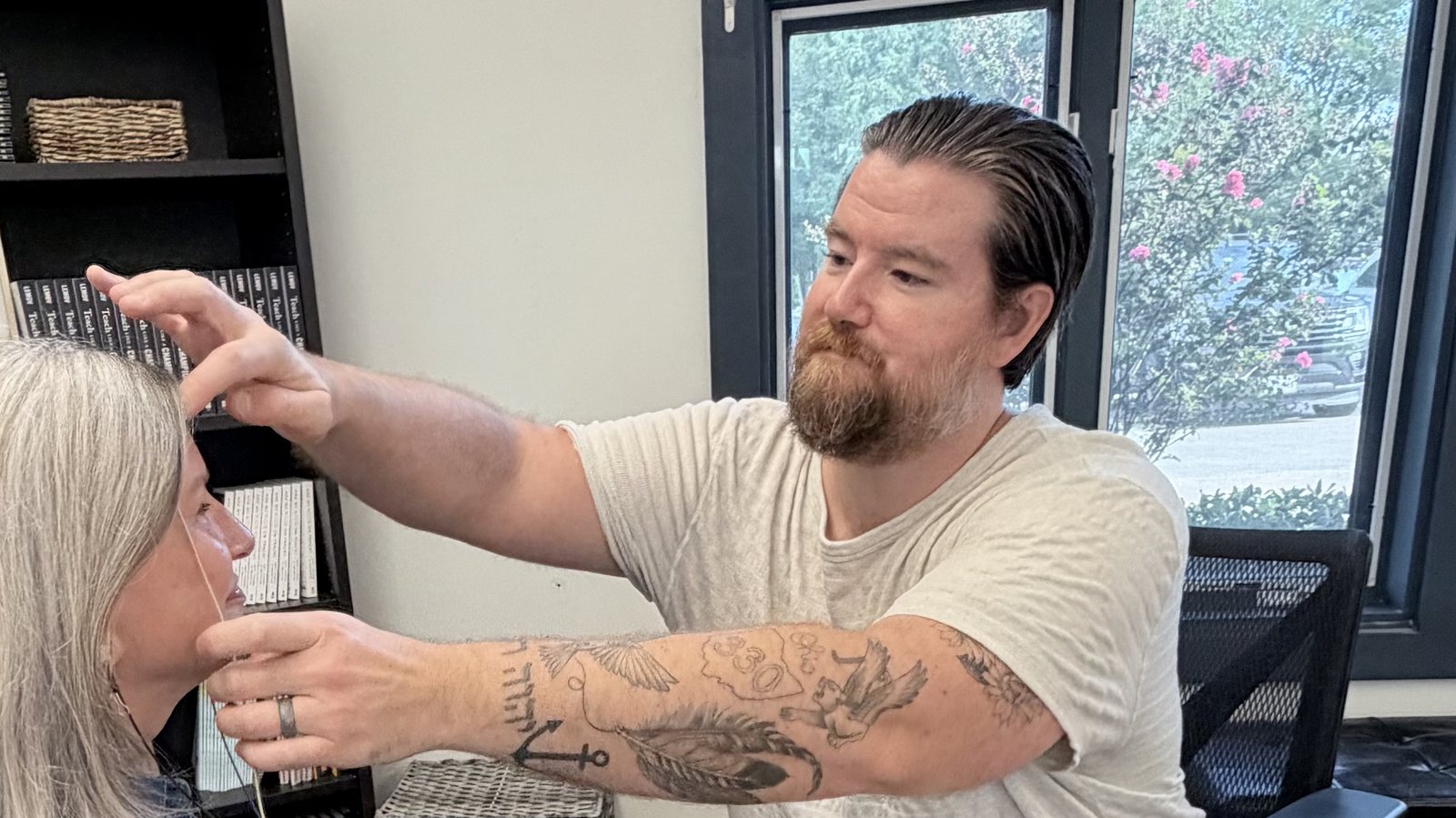
You don't have to "do" anything. That's the point.
With traditional neurofeedback, you watch a screen and try to train your brainwaves over many sessions. LENS is different. It uses a tiny, imperceptible signal — far weaker than what your phone emits — delivered through sensors placed on the scalp. Your brain does the rest, gently nudging itself back toward a more flexible, regulated state.
Sessions are short and completely passive. You sit, relax, and the work happens on its own. Many people notice shifts — calmer, sharper, sleeping better — within the first several sessions.
What clients report
- Anxiety relief — a mind that finally quiets down
- Better focus and follow-through
- Deeper, less restless sleep
- Steadier moods, fewer meltdowns
- Less stress, overwhelm, and "wired but tired"
- More emotional availability for the people around you
Worth saying plainly: LENS isn't magic and it isn't for everyone. On a free consult I'll give you a straight answer about whether it's a sensible fit for what you're dealing with.
People bring LENS a wide range of things
- Cognition — ADHD, autism-spectrum support
- Mood — depression, bipolar
- Anxiety — PTSD, OCD, panic
- Emotional reactivity — short fuses, big swings
- Motivation — procrastination, follow-through
- Motor — coordination, clumsiness
- Pain — fibromyalgia, migraines
- Addiction — reducing substance use
If you found yourself in that list, that's exactly what a free consult is for. LENS supports — it doesn't replace — appropriate medical and therapeutic care, and results vary person to person.
Have a Texas Education Freedom Account? LENS is an approved educational-therapy expense for TEFA families, and Rhett is an approved TEFA vendor. See how to use your funds →
Most people feel a difference sooner than they expect.
In my experience the majority of clients see a noticeable change once we get going — steadier mood, clearer focus, easier sleep. We track how you're doing as we go, so you're never guessing whether it's working.
I also run a weekly LENS program at a local private school — ask me about it if you'd like to know more.
Both of these are Google reviews, shared with permission.
I highly recommend trying LENS with Rhett! I was initially intrigued by the concept of LENS and was more than a little surprised by the results. Over the course of a few months of weekly sessions I felt like a much more regulated version of myself. My wife noticed that my tendency towards overstimulation was significantly decreased. If you are intrigued by the idea, but a little skeptical (like I was) I can tell you that it is the real deal!
Rhett has been amazing for both my son and me! He works with us using LENS Neurofeedback, and the changes we've seen have been remarkable. For me, I've found that I'm calmer in situations that would normally trigger a strong stress response or leave me feeling overwhelmed. I am truly impressed with the results we've experienced through LENS Neurofeedback.
The things people ask before booking a first LENS session.
Is it safe?
Yes. LENS is non-invasive and uses an extremely low-energy signal. It's well-tolerated; the most common side effect is feeling tired or unusually relaxed afterward. We start gently and adjust to how you respond.
Does it hurt? Will I feel anything?
No. The signal is below the threshold of sensation — most people feel nothing during the session itself. You simply sit comfortably while it runs.
How much does it cost, and how long are sessions?
New clients start with a brain-mapping session ($225, about 50 minutes). After that, LENS sessions are $115 each and short — typically 15–20 minutes. Reduced rates for first responders, educators, veterans, healthcare workers, and fellow therapists. Most people do LENS in a series, so packages bring the per-session cost down. See the fees page for the full picture, or ask on a free consult.
Can you bring LENS to a school or organization?
Yes. Alongside individual sessions and multi-session packages, I work with schools and organizations who want to bring LENS to their people — and I'm available for live demonstrations so your group can see exactly how it works. Reach out and we'll figure out what makes sense.
Can I do LENS and talk therapy together?
Often, yes — many people do both. We'll figure out the right mix for what you're working on rather than forcing everything into one approach.
Wondering if LENS could help you?
Let's talk it through. A free consult is the easiest way to get a real answer.